
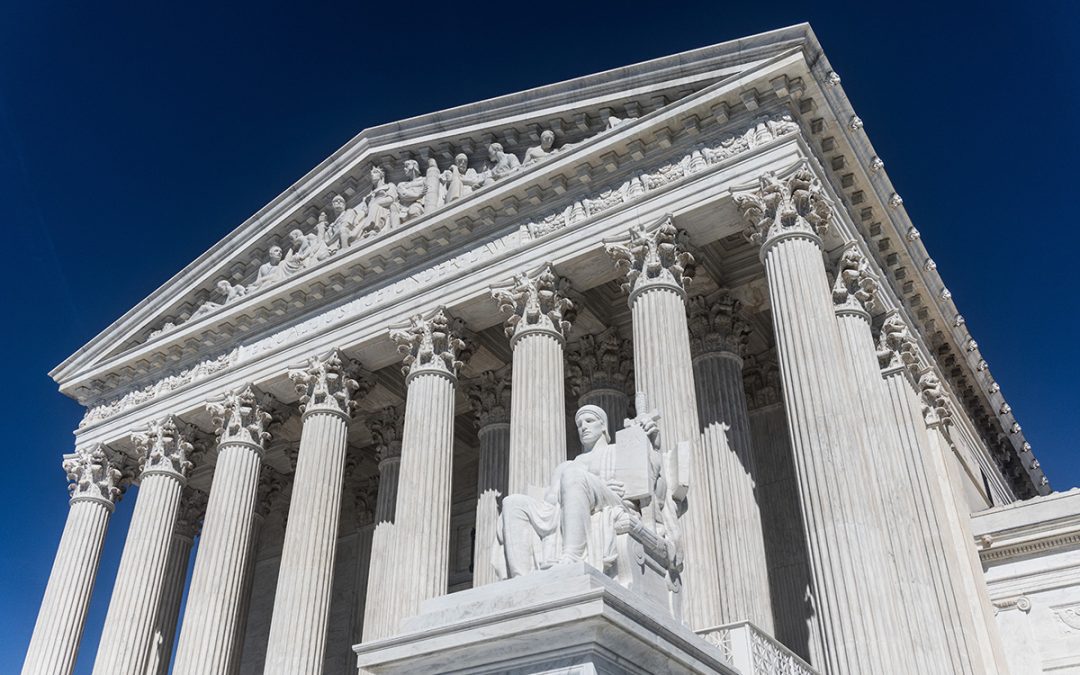
A landmark Supreme Court decision could impact how federal firearm charges involving marijuana use are handled across Virginia.
On June 18, 2026, the U.S. Supreme Court issued a unanimous decision in United States v. Hemani, ruling that the federal government cannot automatically remove someone’s Second Amendment rights based solely on their admitted use of marijuana.
For Virginians, this decision is especially important. While Virginia allows possession of small amounts of marijuana under state law, marijuana remains illegal under federal law — creating a complicated legal gap for individuals who also own or possess firearms.
Below, we break down what happened in the case, what the Supreme Court decided, and what this ruling could mean for gun owners throughout Hampton Roads, Williamsburg, and across the Commonwealth.
What Happened in United States v. Hemani?
The case began in 2022 after federal agents searched the Texas home of Ali Danial Hemani during an unrelated investigation.
During the search, agents discovered a handgun, marijuana, and a small amount of cocaine. Hemani admitted that he used marijuana approximately every other day, but there was no evidence that he was under the influence when the firearm was found or that he had ever used the firearm in a dangerous manner.
Based on that admission, federal prosecutors charged Hemani under 18 U.S.C. § 922(g)(3) — a federal law that prohibits an “unlawful user” of a controlled substance from possessing a firearm.
Hemani challenged the charge, arguing that applying the law in his situation violated his Second Amendment rights. The trial court agreed and dismissed the indictment. The Fifth Circuit Court of Appeals later upheld that decision, leading the government to ask the Supreme Court to review the case.
The Supreme Court’s Decision
The Supreme Court ruled that the government went too far by automatically applying the firearm ban based only on marijuana use.
The Court relied on the historical-tradition test established in New York State Rifle & Pistol Association v. Bruen and further discussed in United States v. Rahimi, finding that historical firearm restrictions did not support permanently disarming someone simply because they used marijuana.
The Court determined that marijuana use alone does not automatically prove that someone is dangerous or that they should lose their constitutional right to possess a firearm.
However, the ruling was narrow.
The Supreme Court did not eliminate the federal firearm statute entirely. The law can still apply when there is evidence of intoxication, impairment, or dangerous conduct involving firearm possession.
Why This Matters for Virginia Gun Owners
Virginia’s marijuana laws and federal firearm laws have created confusion for years.
Although Virginia has reduced penalties surrounding personal marijuana possession, marijuana remains classified as a controlled substance under federal law.
Before this decision, an admission of regular marijuana use could potentially expose someone to serious federal firearm charges under § 922(g)(3).
Following United States v. Hemani, prosecutors may need more than a simple admission of marijuana use. They may need evidence connecting the drug use to actual impairment, dangerous behavior, or unlawful firearm possession circumstances.
For individuals facing federal firearm investigations, this ruling may provide additional arguments when challenging charges, negotiating resolutions, or seeking dismissal of certain cases.
What This Decision Does Not Change
While this ruling is significant, several important limitations remain.
The decision is fact-specific.
The Court’s ruling was based on the specific facts of Hemani’s case, including the lack of evidence that he was impaired or using the firearm dangerously.
Virginia firearm laws remain unchanged.
The decision addressed federal law only. It does not change Virginia firearm regulations or state-level restrictions.
Other firearm restrictions still apply.
The ruling does not impact other firearm prohibitions, including restrictions related to felony convictions, domestic violence protective orders, or other disqualifying circumstances.
Frequently Asked Questions
Does this mean marijuana users can now legally own guns?
Not automatically.
The Supreme Court did not remove the federal firearm restriction entirely. Instead, the ruling limits how the government can apply the law when marijuana use alone is the only factor.
Each case will depend on its specific facts.
Can someone still face federal charges for possessing a firearm while using marijuana in Virginia?
Yes.
The federal statute remains in place. What changed is that prosecutors may need additional evidence beyond simply proving marijuana use.
Does this affect Virginia concealed handgun permits?
No.
The decision focused on federal prosecution and does not directly change Virginia’s concealed handgun permitting process.
What should someone do if they are investigated for firearm and drug-related charges?
Before answering questions or consenting to searches, individuals should speak with an experienced criminal defense attorney.
Statements about drug use, firearm possession, or other circumstances can become important evidence in federal investigations.
Contact a Virginia Criminal Defense Attorney
If you are facing questions involving firearms, federal drug charges, or possible Second Amendment issues, our legal team can help explain your options and evaluate how this decision may apply to your situation.
Contact our office today to discuss your specific situation and learn about your legal options.
This article is intended for informational purposes only and does not constitute legal advice for any specific case.
Recent Comments