
Are Flock Cameras Legal in Virginia? Virginia Law, Privacy Rights, and the Fourth Amendment
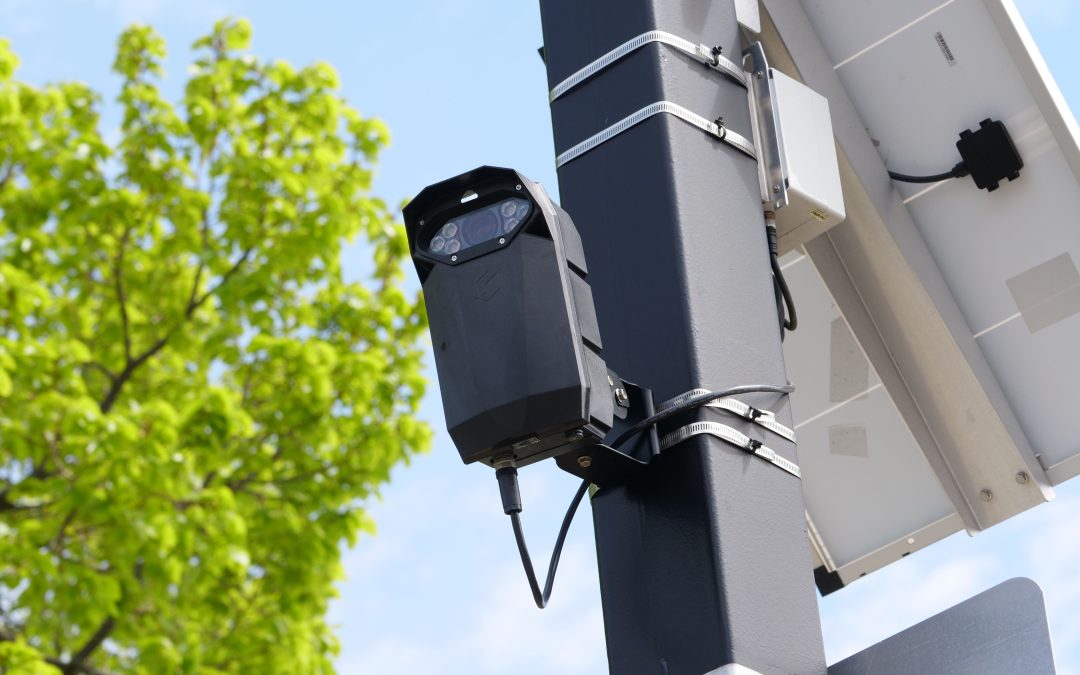
Flock cameras have become increasingly common in Virginia. These automated license plate reader cameras—often called ALPRs—photograph vehicles traveling on public roads and use computer technology to record license plate numbers, vehicle characteristics, and the location and time of the photograph.
Law enforcement agencies frequently use Flock cameras to investigate burglaries, stolen vehicles, shootings, homicides, missing persons, and other crimes. But the technology also raises an important constitutional question:
Can police collect and search information about where your vehicle travels without first obtaining a search warrant?
As of September 2026, the answer under Virginia law is generally yes, but with significant statutory restrictions—and the Fourth Amendment question remains dependent upon the scope and nature of the surveillance.
A recent published decision from the Virginia Court of Appeals, Robinson v. Commonwealth, is currently the most important Virginia appellate decision addressing the constitutionality of Flock cameras. The case held that the particular Flock system used by the City of Norfolk did not constitute an unreasonable search under the Fourth Amendment. However, the decision also emphasized that the constitutional analysis is fact-specific and could change if ALPR technology becomes sufficiently comprehensive to create a detailed chronicle of a person’s movements.
What Are Flock Cameras?
Flock Safety cameras are a form of automatic license plate recognition technology, or ALPR.
Virginia law defines an “automatic license plate recognition system” as a system using high-speed cameras and computer algorithms to convert images of license plates, vehicles, or both into computer-readable information. Va. Code § 2.2-5517(A).
The information can include considerably more than a license plate number. Under Virginia law, “system data” can include:
- License plate images;
- Vehicle images;
- Vehicle characteristics;
- Date and time of the image;
- Location of the image; and
- Peripheral images from which additional analytical information may be extracted.
Va. Code § 2.2-5517(A).
In other words, Flock technology creates a searchable record showing that a particular vehicle was observed at a particular location at a particular time.
That capability is what makes the technology useful to law enforcement—and what creates the privacy concerns surrounding it.
Is It Legal for Police to Use Flock Cameras in Virginia?
Generally, yes.
Virginia has expressly authorized law-enforcement agencies to use automatic license plate recognition systems, subject to substantial restrictions.
Virginia Code § 2.2-5517 now establishes a comprehensive statutory framework governing the use of ALPR systems by law enforcement.
Among other things, Virginia requires ALPR systems used by law enforcement to satisfy specific technological and security requirements. Vendors must certify that Virginia system data will not be improperly sold or shared and that system data can be purged after 21 days. Va. Code § 2.2-5517(B).
The statute also limits the purposes for which law enforcement may use the technology.
When Can Virginia Police Use Flock Cameras?
Under Va. Code § 2.2-5517(D), law enforcement may use an ALPR system:
- As part of a criminal investigation where there is reasonable suspicion that a crime was committed;
- As part of an active investigation involving a missing or endangered person or a person associated with human trafficking; or
- To receive notifications concerning certain persons or property, including missing persons, persons with outstanding warrants, persons associated with human trafficking, stolen vehicles, and stolen license plates.
The statute also requires information necessary to create an audit trail to be entered when the system is queried.
Most importantly, the statute provides that an agency may not query or download system data unless the information relates to one of the statutorily permitted purposes. Va. Code § 2.2-5517(D).
This is an important distinction.
The fact that a Flock camera is legally installed does not mean that a police officer has unlimited authority to search the resulting database for any reason.
Virginia Law Also Limits How Long Flock Data Can Be Kept
Virginia has imposed a relatively short statutory retention period.
Under Va. Code § 2.2-5517(E), system data generally must be destroyed after 21 days.
Audit-trail data must generally be destroyed after two years.
There is an important exception when the information is part of an ongoing investigation, prosecution, or civil action. In that circumstance, the information can be retained until the matter has reached its final disposition, including applicable appeals and habeas proceedings.
This means that the 21-day rule is not an absolute prohibition against retaining evidence connected to a criminal case.
Can Police Share Flock Camera Information?
Virginia law places substantial restrictions on sharing ALPR information.
Under Va. Code § 2.2-5517(F), system data and audit-trail data generally are not subject to disclosure under the Virginia Freedom of Information Act.
Law-enforcement agencies generally cannot sell the information or simply disseminate it to other governmental, private, commercial, or federal databases.
There are, however, statutory exceptions permitting sharing for specified law-enforcement purposes, with prosecutors, with criminal defendants and their attorneys for discovery, pursuant to court orders or subpoenas, and for certain emergency and missing-person purposes.
This is particularly significant for criminal-defense attorneys.
A defendant may have a statutory right to obtain Flock information when that information is relevant to the criminal case.
Virginia Requires Police Departments to Audit Flock Use
Virginia law also requires law-enforcement agencies using ALPR systems to adopt written policies governing their use.
Those policies must address:
- User training;
- Permitted purposes;
- Database accuracy;
- Procedures for confirming notifications;
- Restrictions on downloading information;
- Internal auditing;
- Retention and destruction;
- Data sharing; and
- Security procedures.
The statute requires internal auditing at least every 30 days. Va. Code § 2.2-5517(H).
Law-enforcement agencies must also report information concerning their use of ALPR systems to the Virginia State Police, including the number of cameras, the number and purposes of queries, databases with which the information was compared, vehicle stops resulting from notifications, other agencies with access, and identified instances of unauthorized use.
Agencies must publicly post their ALPR policies and annual reports, subject to statutory exceptions for sensitive information. Va. Code § 2.2-5517(I)-(K).
Flock Camera Alerts Do Not Automatically Give Police Reasonable Suspicion to Stop a Vehicle
This is another important protection in Virginia law.
Suppose a Flock camera alerts police that a vehicle may be stolen.
The notification itself does not automatically constitute reasonable suspicion to stop the vehicle.
Virginia Code § 2.2-5517(M) provides that before stopping a vehicle based upon an ALPR notification, an officer must either:
- Develop independent reasonable suspicion for the stop; or
- Confirm that the license plate or identifying characteristics of the vehicle actually match the information that generated the notification.
This provision can be extremely important in a motion to suppress.
A defense attorney should therefore examine not only why police searched the Flock database, but also what information they relied upon before stopping the vehicle.
What Happens If Police Violate Virginia’s Flock Camera Law?
The statute has teeth.
A person who willfully and intentionally queries, accesses, or uses an ALPR system for an unauthorized purpose—or improperly sells, shares, or disseminates the information—can be guilty of a Class 1 misdemeanor.
More importantly for criminal defendants, Va. Code § 2.2-5517(O) provides an exclusionary remedy.
Evidence obtained as the result of a violation of subsection D, F, L, or M is not admissible by the Commonwealth in a criminal or civil proceeding.
The statute expressly provides that the evidence may nevertheless be admitted by a defendant in a criminal proceeding or by a civil litigant other than the Commonwealth.
Thus, a violation of Virginia’s ALPR statute can potentially provide a separate statutory basis for challenging evidence—independent of the Fourth Amendment.
The Fourth Amendment and Flock Cameras
The constitutional question is more complicated.
The Fourth Amendment provides:
“The right of the people to be secure in their persons, houses, papers, and effects, against unreasonable searches and seizures, shall not be violated.”
The fundamental question in a surveillance case is whether the government’s conduct constitutes a search and, if so, whether that search is reasonable.
The Supreme Court has recognized that people can have a reasonable expectation of privacy in information even when the information relates to conduct occurring in public.
That principle is particularly important when technology allows the government to collect information on a scale that would have been impossible through traditional police observation.
United States v. Knotts
In United States v. Knotts, 460 U.S. 276 (1983), the Supreme Court considered police use of a beeper to track an object traveling on public roads.
The Court concluded that there was no Fourth Amendment violation under the facts of that case because the movements were exposed to public view.
That case provides substantial support for the government’s position concerning traditional license-plate readers.
But Knotts predates modern networked surveillance technology.
The Supreme Court has subsequently recognized that technology can change the constitutional analysis.
Carpenter v. United States
In Carpenter v. United States, 585 U.S. 296 (2018), the Supreme Court considered government access to historical cell-site location information.
The Court held that obtaining extensive historical location information was a Fourth Amendment search requiring a warrant.
The important point was not simply that the information came from a public place.
Instead, the Court focused on the extraordinary quantity and sensitivity of the information.
Historical cell-site data could create an “intimate window” into a person’s life by revealing movements and associations over an extended period.
The Supreme Court concluded that the government had effectively obtained a comprehensive record of the person’s movements.
That principle creates the potential constitutional problem for Flock cameras.
Leaders of a Beautiful Struggle v. Baltimore Police Department
The Fourth Circuit considered a similar issue in Leaders of a Beautiful Struggle v. Baltimore Police Department, 2 F.4th 330 (4th Cir. 2021) (en banc).
Baltimore operated an aerial surveillance program that could monitor vehicles and people across a large portion of the city.
The Fourth Circuit concluded that the surveillance program violated the Fourth Amendment because the extensive collection of movement information could reveal intimate details about people’s habits and associations.
The court applied the principles of Carpenter to the aerial surveillance system.
The case is particularly important in Virginia because Virginia is within the Fourth Circuit.
The Most Important Virginia Case: Robinson v. Commonwealth
In April 2026, the Virginia Court of Appeals issued a published opinion directly addressing the constitutionality of Flock cameras.
The case is Robinson v. Commonwealth, Record No. 1912-24-1 (Va. Ct. App. Apr. 7, 2026).
The case arose from a series of burglaries in Norfolk.
Norfolk had installed 172 Flock cameras at intersections throughout the city. The cameras captured photographs of vehicles and license plates and recorded information including the license plate number, vehicle make, model, color, and distinctive characteristics. At the time involved in the case, the information was stored for approximately 30 days.
Police investigating a burglary received information that a white BMW SUV with distinctive black rims might have been involved.
An officer searched the Flock database using the vehicle’s characteristics and a limited time period. The system returned an image of a white BMW with black rims and its license plate.
Police then used the license plate to identify the registered owner.
The defendant argued that the warrantless Flock search violated the Fourth Amendment.
The Virginia Court of Appeals rejected that argument.
The Court Held That the Flock Search Was Not a Fourth Amendment Search
The Court of Appeals emphasized that a license plate and the exterior characteristics of a vehicle are exposed to public view.
The court relied in part on Knotts, concluding that the defendant had no reasonable expectation of privacy in those characteristics while driving on a public road.
The court also emphasized the limited nature of Norfolk’s Flock system.
According to the court, the cameras did not continuously monitor every movement of the defendant’s vehicle. Instead, the cameras captured intermittent still images at various locations.
The court distinguished Carpenter and Leaders of a Beautiful Struggle, reasoning that those cases involved substantially more comprehensive surveillance.
The Norfolk Flock system, the court concluded, did not create the equivalent of “near perfect surveillance.”
Accordingly, the court held that the police did not need a search warrant to access the Flock information in the circumstances presented in Robinson.
But Robinson Does Not Mean That All Flock Searches Are Constitutional
This is perhaps the most important point from the decision.
The Court of Appeals expressly recognized that the Fourth Amendment analysis is fact-specific.
The court relied upon Bennett v. Commonwealth, 212 Va. 863, 865 (1972), for the principle that whether a governmental intrusion is reasonable depends upon the particular facts and circumstances.
The court specifically stated that its decision was based upon the current Flock system in Norfolk.
The court declined to decide whether future Flock technology could become sufficiently comprehensive to create a constitutionally protected record of a person’s movements.
That qualification could become extremely important.
A system containing a handful of cameras that captures an occasional photograph is constitutionally different from a system capable of reconstructing virtually every trip a person makes over weeks, months, or years.
The Constitutional Line May Be Surveillance, Not the Camera
This distinction provides an important framework for analyzing future Flock cases.
A single photograph of a vehicle driving down a public street is difficult to distinguish from what an officer could observe with his or her own eyes.
But consider a hypothetical system that could determine:
- Where your vehicle goes every day;
- Where you work;
- Where you sleep;
- Which doctors you visit;
- Which churches you attend;
- Which political meetings you attend;
- Which people you regularly visit;
- Which businesses you frequent; and
- Your complete travel history over several months.
At some point, the argument becomes much stronger that the government is no longer merely observing something exposed to public view.
Instead, it is creating a detailed historical record of a person’s movements and associations.
That is the constitutional concern recognized in Carpenter and Leaders of a Beautiful Struggle.
The Federal Courts Have Also Considered Flock Cameras
The Eastern District of Virginia has addressed Flock cameras in two significant cases.
In United States v. Martin, 753 F. Supp. 3d 454 (E.D. Va. 2024), the federal court considered Flock information obtained in the Richmond area.
The court concluded that the Flock system at issue did not violate the defendant’s reasonable expectation of privacy.
The Virginia Court of Appeals later relied upon Martin in Robinson.
The Eastern District of Virginia subsequently considered the Norfolk Flock system in Schmidt v. City of Norfolk.
In January 2026, the federal court granted summary judgment to the City of Norfolk, concluding that the Norfolk ALPR system did not violate the plaintiffs’ Fourth Amendment rights based upon the facts presented.
The court nevertheless recognized the underlying constitutional concern: at some point, sufficiently comprehensive ALPR surveillance could potentially become unconstitutional.
Privacy Concerns Remain Even If the Technology Is Currently Constitutional
The constitutional analysis and the privacy analysis are not necessarily identical.
Something can be legal under the Fourth Amendment while still raising serious privacy concerns.
Flock cameras create a database of vehicles traveling through a community. Unlike an individual police officer who happens to see a vehicle, a computerized system can make those observations searchable.
That distinction matters.
A police officer standing on a street corner might see a vehicle drive past.
A searchable database can potentially answer questions such as:
“Where has this vehicle been?”
That capability can dramatically increase the government’s ability to reconstruct people’s activities.
Virginia’s new statutory framework recognizes this concern by imposing limits on retention, sharing, auditing, permissible uses, and access.
Flock Cameras and the Virginia Freedom of Information Act
Another interesting aspect of Virginia’s law is that ALPR data is not subject to ordinary disclosure under the Virginia Freedom of Information Act.
Va. Code § 2.2-5517(F) expressly excludes system data and audit-trail data from FOIA disclosure.
At the same time, Virginia requires law-enforcement agencies to publicly post their ALPR policies and annual reports.
This creates an important balance: the public may obtain information about how an agency uses the technology, even though the underlying database generally is not publicly available.
What Should a Criminal Defense Attorney Investigate in a Flock Case?
When Flock information appears in a Virginia criminal prosecution, defense counsel should not simply assume that the information is admissible because the vehicle was traveling on a public road.
Several questions should be investigated.
1. Why was the Flock database searched?
Was there an actual criminal investigation?
Was there reasonable suspicion that a crime had occurred?
Was the query related to a missing person, stolen vehicle, warrant, or another statutory purpose?
2. What exactly did the officer search?
The statutory definition of “query” is broad.
It includes searches based upon:
- Full or partial license plates;
- Vehicle characteristics;
- Date;
- Time;
- Location; and
- Other searchable information.
Va. Code § 2.2-5517(A).
3. What time period was searched?
A two-hour search surrounding a particular crime is significantly different from a search covering months of historical travel.
The latter may present substantially stronger Fourth Amendment arguments under Carpenter.
4. How many cameras were involved?
A handful of cameras may produce isolated observations.
A dense network of cameras covering virtually every road could create a much more comprehensive picture of a person’s movements.
5. How much data was available?
Defense counsel should determine the retention period applicable to the particular system at the time of the search.
6. Was the query properly documented?
Virginia law requires an audit trail.
The audit information can include the date and time of the query, the information used to conduct the search, the purpose of the search, the associated case or call number, and the identity of the user. Va. Code § 2.2-5517(A).
7. Was the information shared with another agency?
Virginia law imposes restrictions on sharing ALPR information.
The defense should determine whether information was transferred to another law-enforcement agency or database and whether the transfer complied with § 2.2-5517.
8. Was a vehicle stop based solely on a Flock notification?
If so, § 2.2-5517(M) should be examined carefully.
A Flock notification alone does not automatically constitute reasonable suspicion for a vehicle stop.
What Is the Current Status of Flock Cameras in Virginia?
As of September 2026, the best summary of Virginia law is:
Flock cameras and other ALPR systems are legal in Virginia, but their use is heavily regulated.
Under the Fourth Amendment, the Virginia Court of Appeals has held that the particular Norfolk Flock system considered in Robinson did not require a warrant because it captured intermittent photographs of vehicles traveling on public roads rather than creating comprehensive surveillance of the defendant’s movements.
Federal courts in Virginia have reached similar conclusions concerning the Richmond and Norfolk systems.
But the constitutional question is not permanently settled for every possible ALPR system or every possible Flock search.
The courts have repeatedly emphasized the importance of the scope, duration, density, and nature of the surveillance.
Moreover, Robinson was included on the Virginia appellate courts’ list of Court of Appeals decisions that had been appealed to the Supreme Court of Virginia.
That makes the issue one to watch closely.
The Bottom Line
Are Flock cameras legal in Virginia? Yes.
Can Virginia police use Flock cameras without obtaining a warrant every time? Under current Virginia appellate law, generally yes, when the system and search are comparable to those considered in Robinson.
But that does not give law enforcement unlimited authority.
Virginia Code § 2.2-5517 establishes significant restrictions on:
- When ALPR systems may be searched;
- How the information may be used;
- How long information may be retained;
- How information may be shared;
- How officers may rely upon ALPR notifications;
- How agencies must audit their systems; and
- What happens when officers violate the statute.
And the Fourth Amendment remains an important safeguard.
The key constitutional question may ultimately be not whether a license plate is visible in public, but whether the government’s use of technology has transformed isolated public observations into a comprehensive record of a person’s movements and associations.
For now, Robinson v. Commonwealth provides strong authority supporting the constitutionality of the Norfolk Flock system as it existed in that case. But the decision itself recognizes that the answer could change as the technology—and the extent of government surveillance—changes.
For anyone charged with a crime where Flock camera evidence played a role, the question should therefore not simply be “Was there a Flock camera?”
The more important questions are:
Why was the database searched? What exactly did police search? How much historical information was obtained? How many cameras were involved? How long was the information retained? Was the search authorized under Virginia Code § 2.2-5517? And did the government’s use of the technology cross the constitutional line from observing public activity to conducting comprehensive surveillance?
Those questions can make the difference between admissible evidence and evidence that should be excluded.
This article is intended for general informational purposes and does not constitute legal advice. The law governing automated license plate readers and Flock cameras is developing rapidly, and the outcome of a particular case depends upon the specific facts and circumstances.
Recent Comments