
What Every Driver Needs to Know
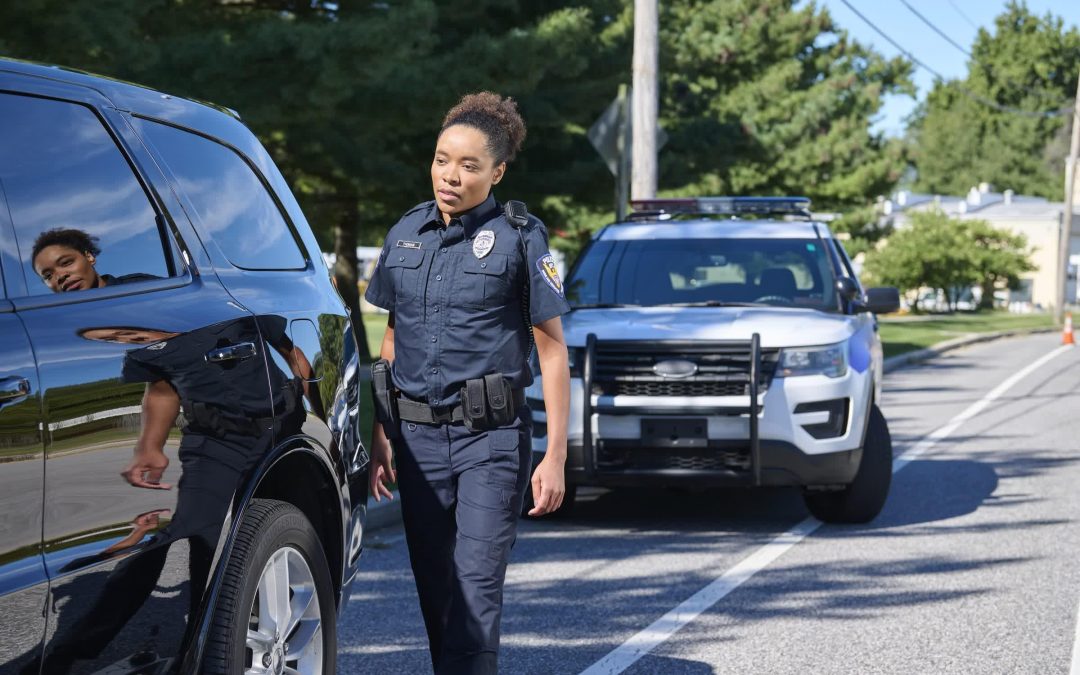
If a Virginia law enforcement officer pulls you over on suspicion of drunk driving and asks you to step out of the car to perform field sobriety tests, you are facing one of the most consequential decisions of the traffic stop. Most drivers instinctively comply, believing cooperation will help them. While the law requires you to exit the vehicle during a traffic stop, you do not need to comply with a request to perform field sobriety tests. In reality, performing the field sobriety tests will end up with you doing the officer’s job for him — and setting yourself up for a DUI conviction.
Here is what you need to know about field sobriety tests (FSTs) in Virginia before you ever find yourself in that situation.
What Is a DUI Under Virginia Law?
Virginia Code § 18.2-266 makes it unlawful for any person to operate a motor vehicle while:
- Under the influence of alcohol;
- Under the influence of any narcotic drug or other self-administered intoxicant to a degree that impairs the person’s ability to drive safely;
- Under the combined influence of alcohol and drugs; or
- With a blood alcohol concentration (BAC) of 0.08% or more.
The statute also establishes BAC thresholds for commercial drivers (0.04%) and persons under 21 (0.02%). A conviction under § 18.2-266 is a Class 1 misdemeanor for a first offense, carrying potential jail time, fines, a license suspension, and mandatory enrollment in the Virginia Alcohol Safety Action Program (VASAP).
The critical phrase in the statute is under the influence — and this is exactly where field sobriety tests come into play. When officers lack a clear BAC reading, they use FSTs to build probable cause for an arrest and to gather evidence to establish impairment in court.
What Are Field Sobriety Tests?
Field sobriety tests are physical and cognitive exercises performed roadside at the officer’s request. The three tests standardized by the National Highway Traffic Safety Administration (NHTSA) are:
1. Horizontal Gaze Nystagmus (HGN) — The officer moves an object (a pen, finger, or light) horizontally in front of your eyes and watches for involuntary jerking movements of the eyeball. Alcohol can cause nystagmus, but so can fatigue, medications, and certain medical conditions.
2. Walk-and-Turn (WAT) — You are asked to walk nine steps heel-to-toe along a line, turn in a prescribed manner, and return. Officers observe for loss of balance, stepping off the line, improper turns, and miscounting steps.
3. One-Leg Stand (OLS) — You are asked to stand on one leg with the other raised approximately six inches off the ground for 30 seconds while counting aloud. Officers look for swaying, use of arms for balance, hopping, and putting the foot down.
Officers may also use non-standardized tests such as reciting the alphabet, counting backward, or the Rhomberg balance test — none of which have the same level of scientific validation as the NHTSA-approved tests.
Are Field Sobriety Tests Mandatory in Virginia?
No. Unlike the implied consent law that governs chemical testing (breathalyzer or blood draw after a lawful arrest), there is no Virginia statute that requires you to perform field sobriety tests. Virginia’s implied consent law, found at § 18.2-268.2, applies to post-arrest chemical tests — not to pre-arrest roadside exercises.
You have the right to politely decline field sobriety tests, and your refusal cannot be used as evidence against you in the same way that refusing a post-arrest breath test can.
Why You Should Think Twice Before Performing Field Sobriety Tests
1. The Tests Are Designed to Document Failure
Field sobriety tests are not pass/fail tests with a clear, objective score. They are structured observation tools designed to give officers a documented basis for an arrest. The officer is not looking for everything you do correctly — he is trained to note every perceived clue of impairment, whether it is a slight sway, looking down at your feet, or starting a step before the instruction is complete.
Even completely sober individuals frequently fail or perform poorly on FSTs. Research has shown that the tests produce false positives at significant rates, and sober subjects fail them more often than most people would expect.
2. Divided Attention Is the Point — Not a Fair Assessment
The WAT and OLS tests are specifically designed as “divided attention” tests. They require you to simultaneously follow instructions, maintain physical balance, and count or track numbers — all while standing on the side of a road at night, in potentially poor lighting, on an uneven surface, in front of a police cruiser with flashing lights, and under the stress of a law enforcement encounter.
The conditions under which you take the test are almost never the same conditions under which the tests were validated.
3. Medical Conditions and Medications Can Cause You to “Fail”
Inner ear disorders, prior knee, hip, or back injuries, neurological conditions, fatigue, certain over-the-counter medications, and even wearing dress shoes or heels can cause clues that officers interpret as signs of impairment. If you have any such condition, performing the tests may only hurt you.
4. Everything Is Being Recorded
In most Virginia jurisdictions, officers are equipped with dashcam and body camera systems. Every step you take — and every stumble, every pause, and every question you ask — is preserved on video and will be played for a judge or jury. Once those observations are on camera, they are very difficult to explain away.
5. The Tests Are Not the Only Factor — But They Become the Central Evidence
Officers frequently arrest on a combination of factors: odor of alcohol, bloodshot eyes, driving behavior, and FST performance. However, in many DUI prosecutions where the BAC result is close to or just above the legal limit, the FST evidence becomes critical to the Commonwealth’s case on the question of impairment. Why hand the prosecution its most compelling evidence?
What Should You Do During a DUI Stop in Virginia?
If you are pulled over and suspect that you may be investigated for DUI, here is practical guidance:
- Be polite and respectful. Rudeness will not help you and may be noted.
- Provide your license, registration, and insurance. These are legally required.
- Exercise your right to remain silent beyond providing identifying information. You are not required to answer questions like “How much have you had to drink tonight?” or “Where are you coming from?”
- Decline field sobriety tests politely. You can say something like: “Officer, I appreciate your time, but I’m not going to perform field sobriety tests.” You do not need to argue or explain further.
- Do not physically resist. If the officer places you under arrest, comply physically and invoke your right to counsel immediately.
- Understand the implied consent law. If you are lawfully arrested for DUI in Virginia, refusing the post-arrest breath or blood test carries its own consequences, including a separate civil charge and license suspension. That is a different decision — and one you should discuss with an attorney as quickly as possible.
What Happens After a DUI Arrest in Virginia?
A DUI charge under § 18.2-266 triggers a legal process that can have long-lasting consequences — criminal penalties, license suspension, increased insurance rates, and a permanent record. Virginia has enhanced penalties for higher BAC levels, prior offenses, and DUIs involving minors in the vehicle.
The good news is that a DUI charge is not the same as a conviction. An experienced Virginia DUI defense attorney can evaluate whether the stop was lawful, whether the officer was properly trained and followed NHTSA protocols in administering the FSTs, whether the testing conditions were appropriate, and whether the BAC evidence was properly obtained and preserved.
Contact Our Firm
If you or someone you know has been charged with DUI in the Hampton Roads or Williamsburg area, do not wait to get legal help. The decisions made in the first hours and days after an arrest can significantly affect the outcome of your case.
Our firm handles DUI defense throughout Hampton Roads, including Virginia Beach, Norfolk, Chesapeake, Suffolk, Portsmouth, Newport News, Hampton, York County, James City County, and Williamsburg.
Contact our office today to discuss your specific situation and learn about your legal options.
This post is for general informational purposes only and does not constitute legal advice. Reading this post does not create an attorney-client relationship. Laws and procedures can change. If you have been charged with a criminal offense in Virginia, please consult with a qualified Virginia criminal defense attorney about the specific facts of your case.
Recent Comments